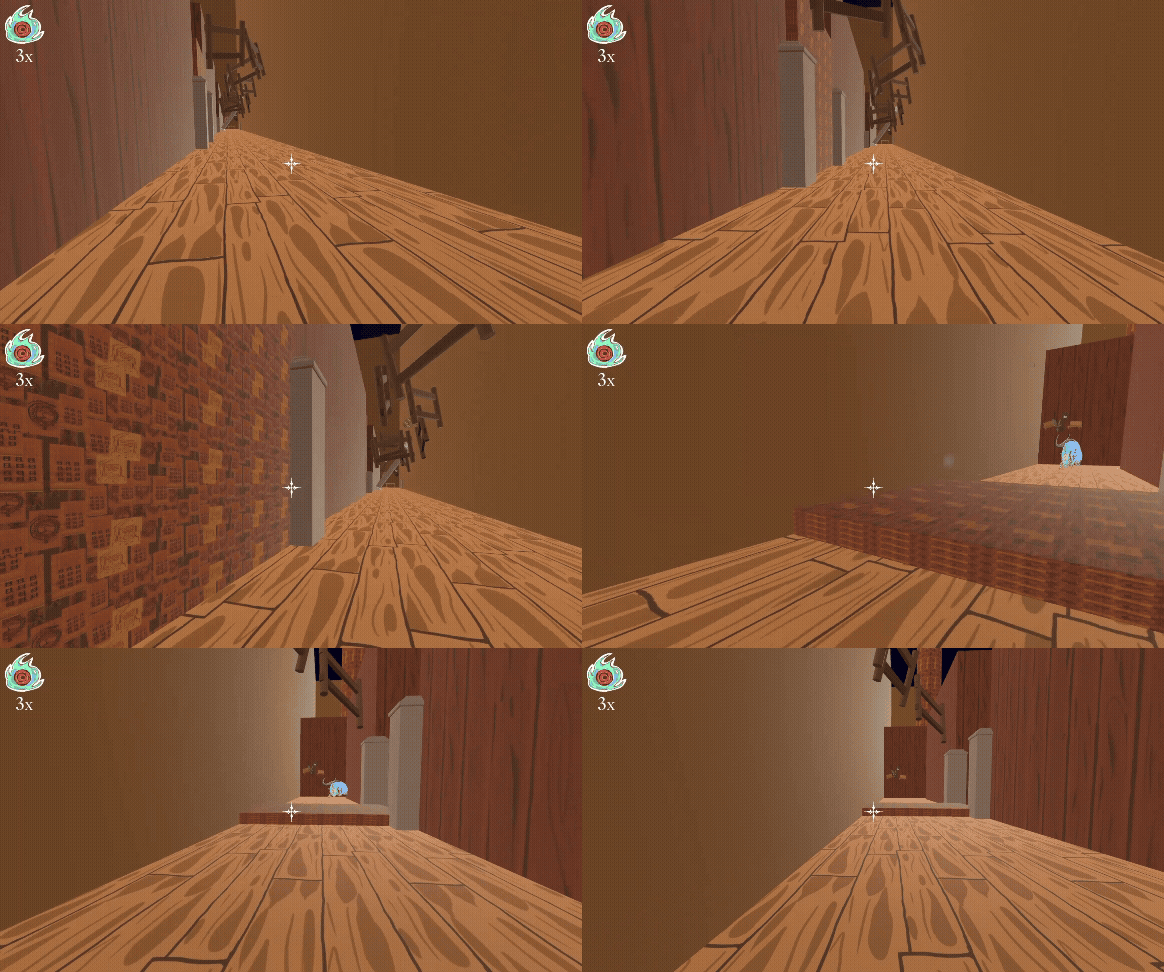
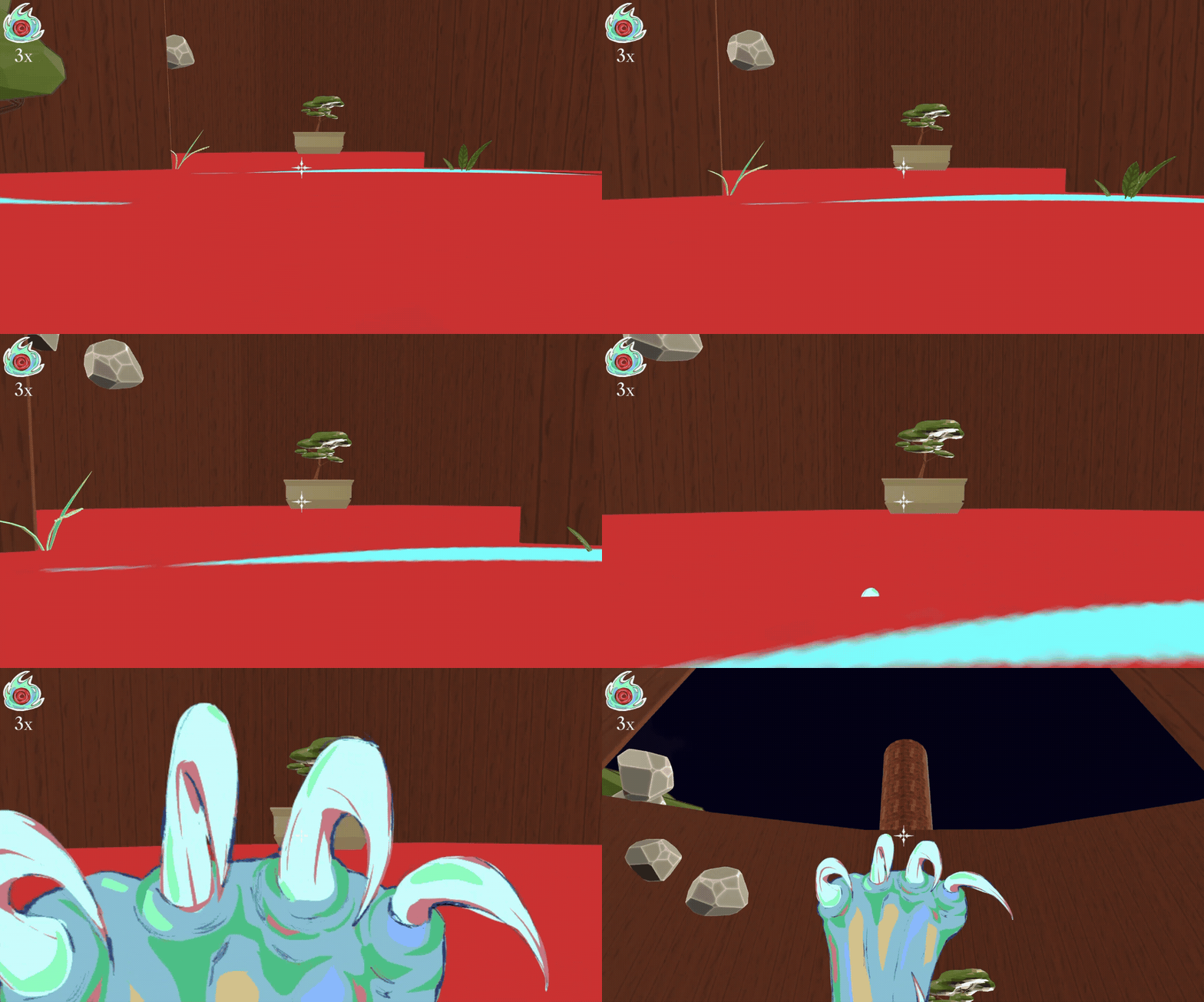
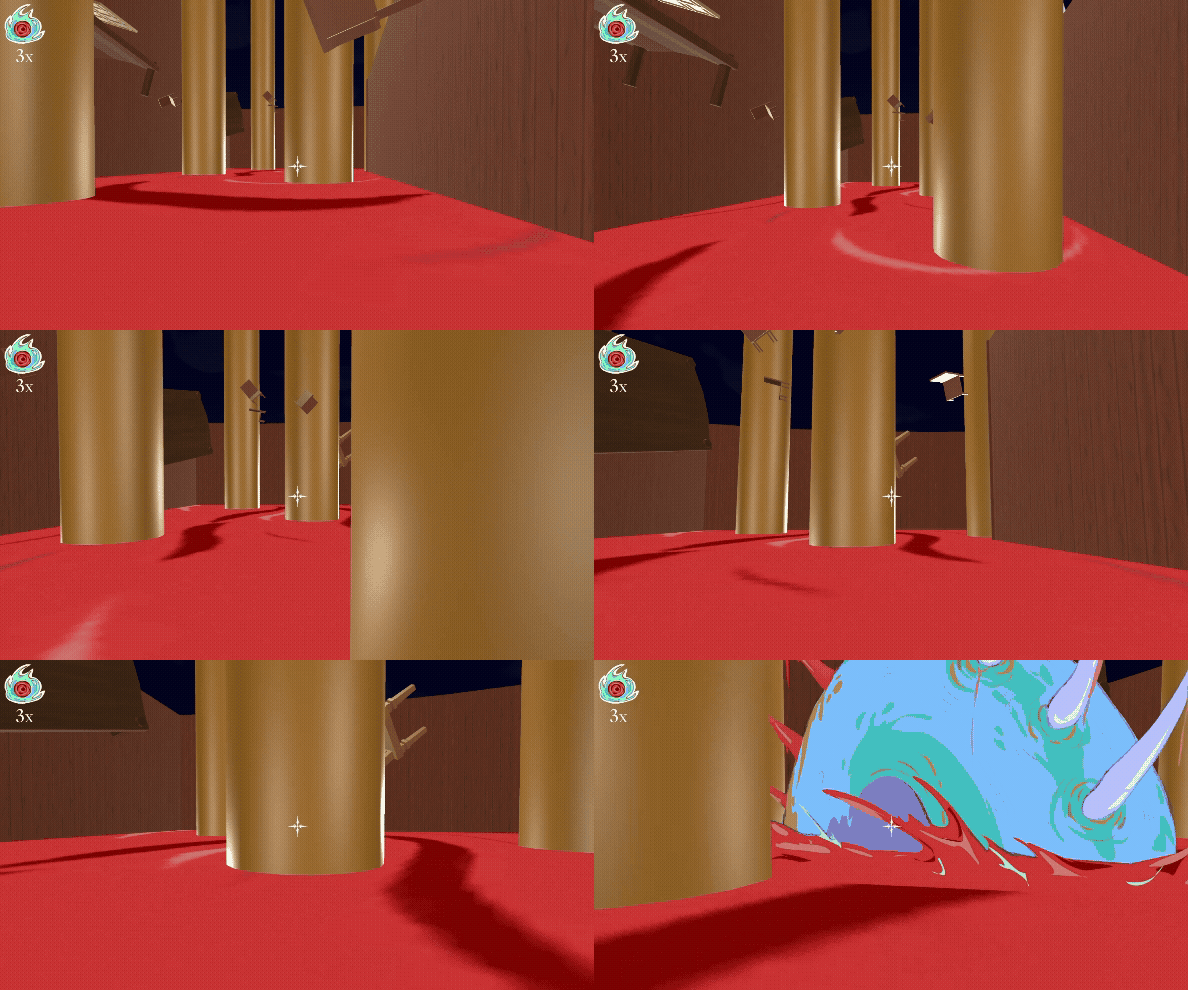
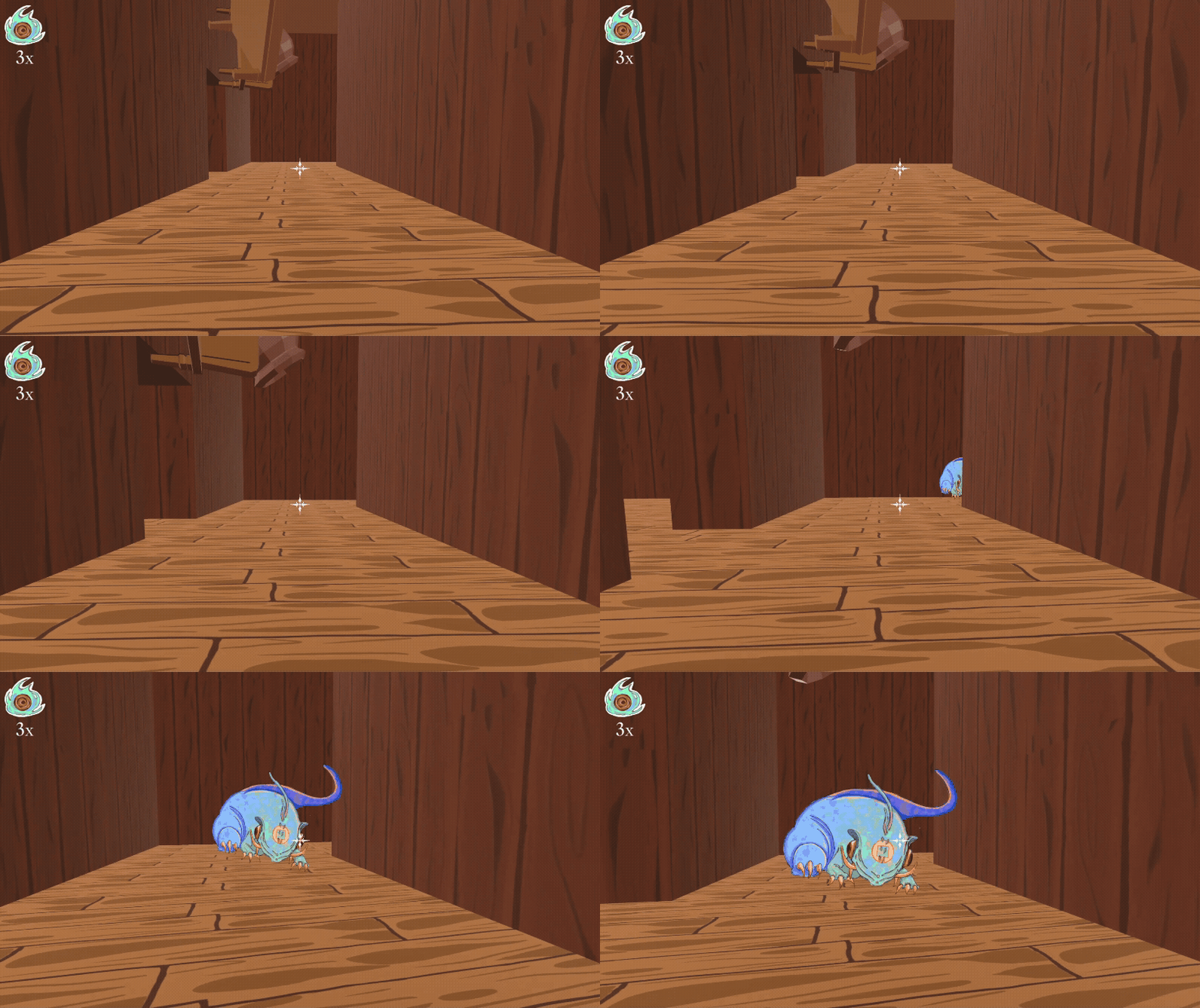
Grabbing and Dropping Objects
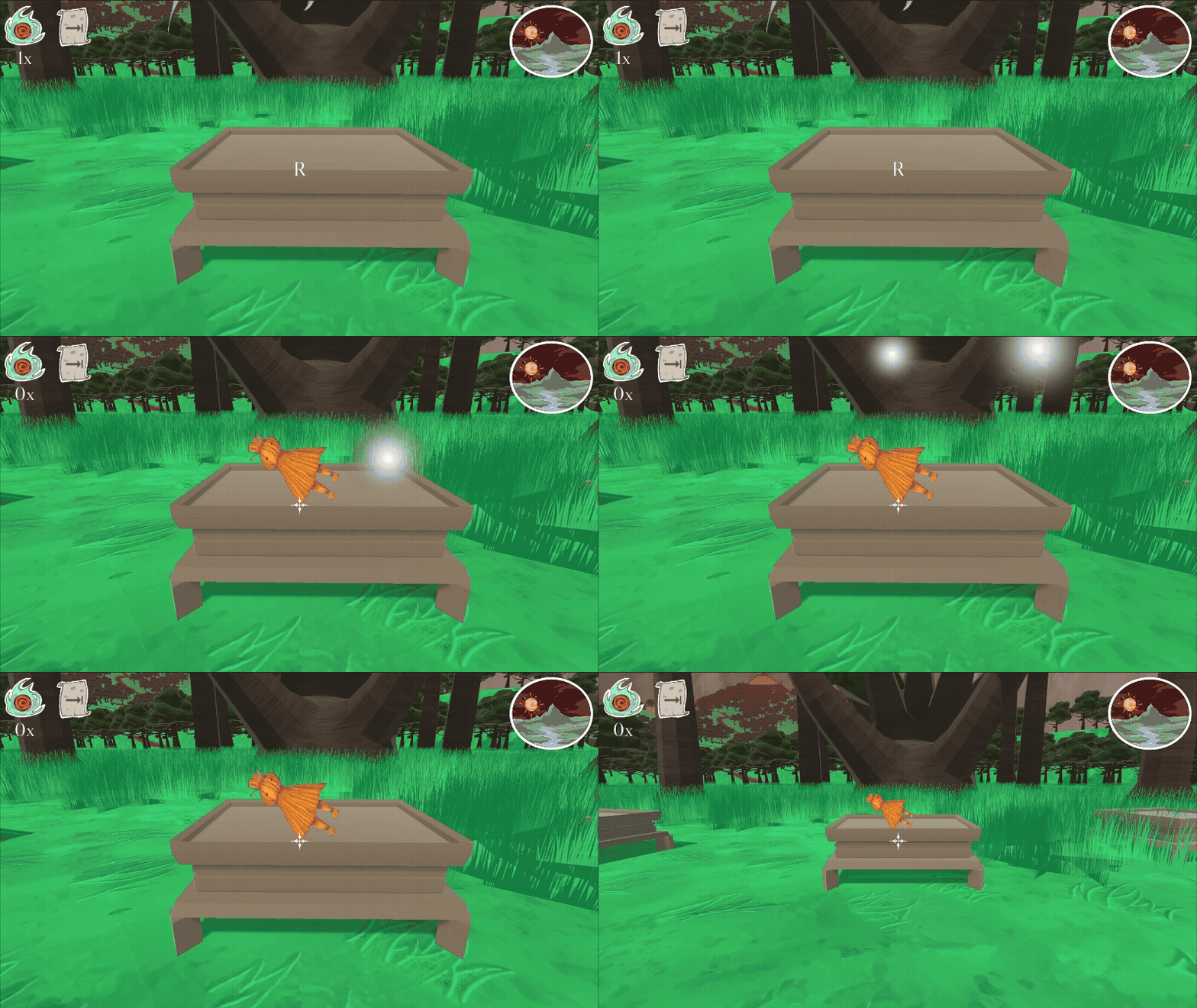
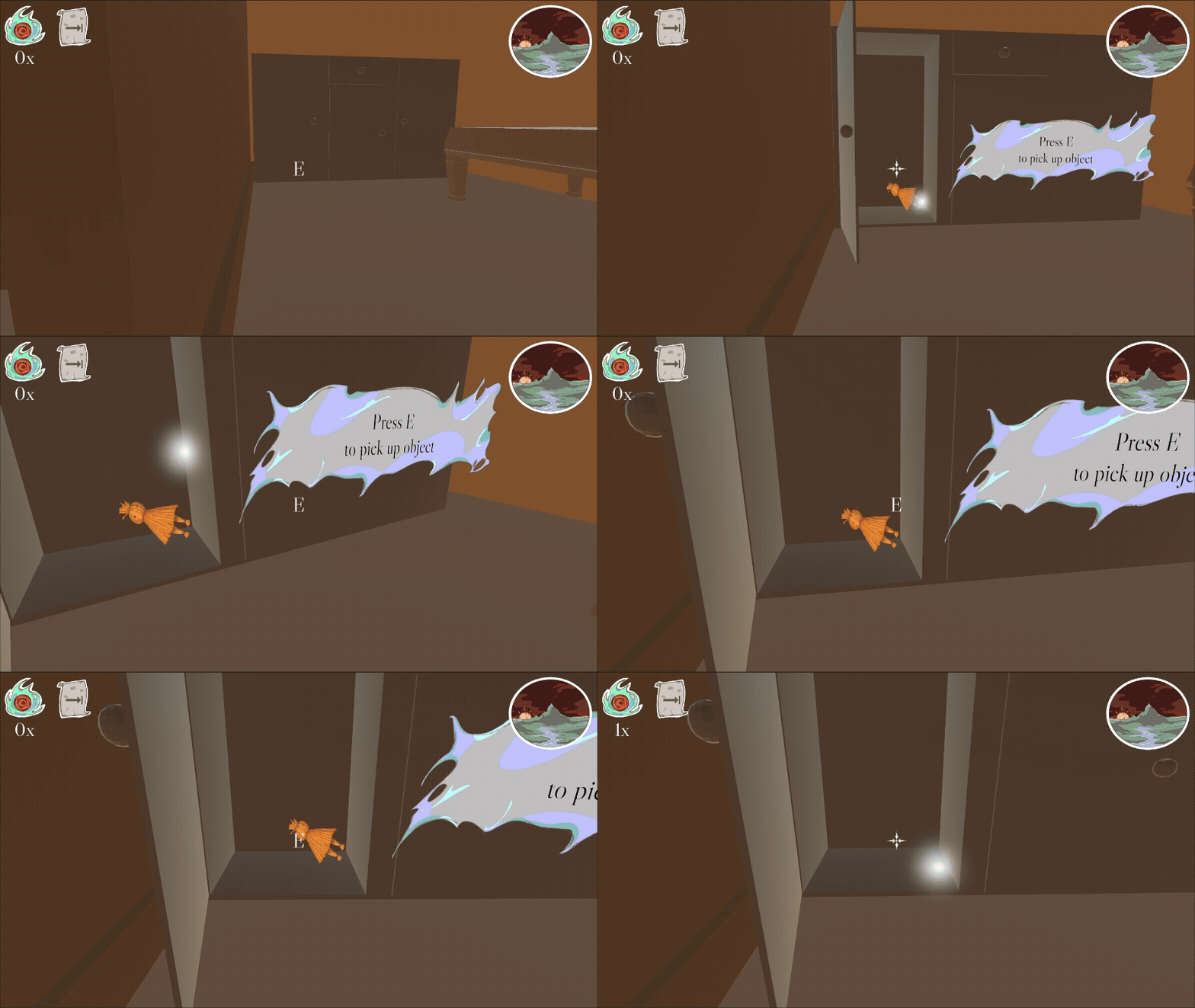
For grabbing objects, I used a raycast that looks for objects with the correct tag. Once found and the correct button is pressed, the object dissappears and is stored in the inventory.
For dropping objects, I have the raycast look for the correct tag once again. The purpose of the tag in this case is to avoid placing objects in the wrong places, possibly losing them. Once the correct tag is found, the button is pressed, and the inventory is searched for the object being placed. When found, the object is removed from the inventory and placed.
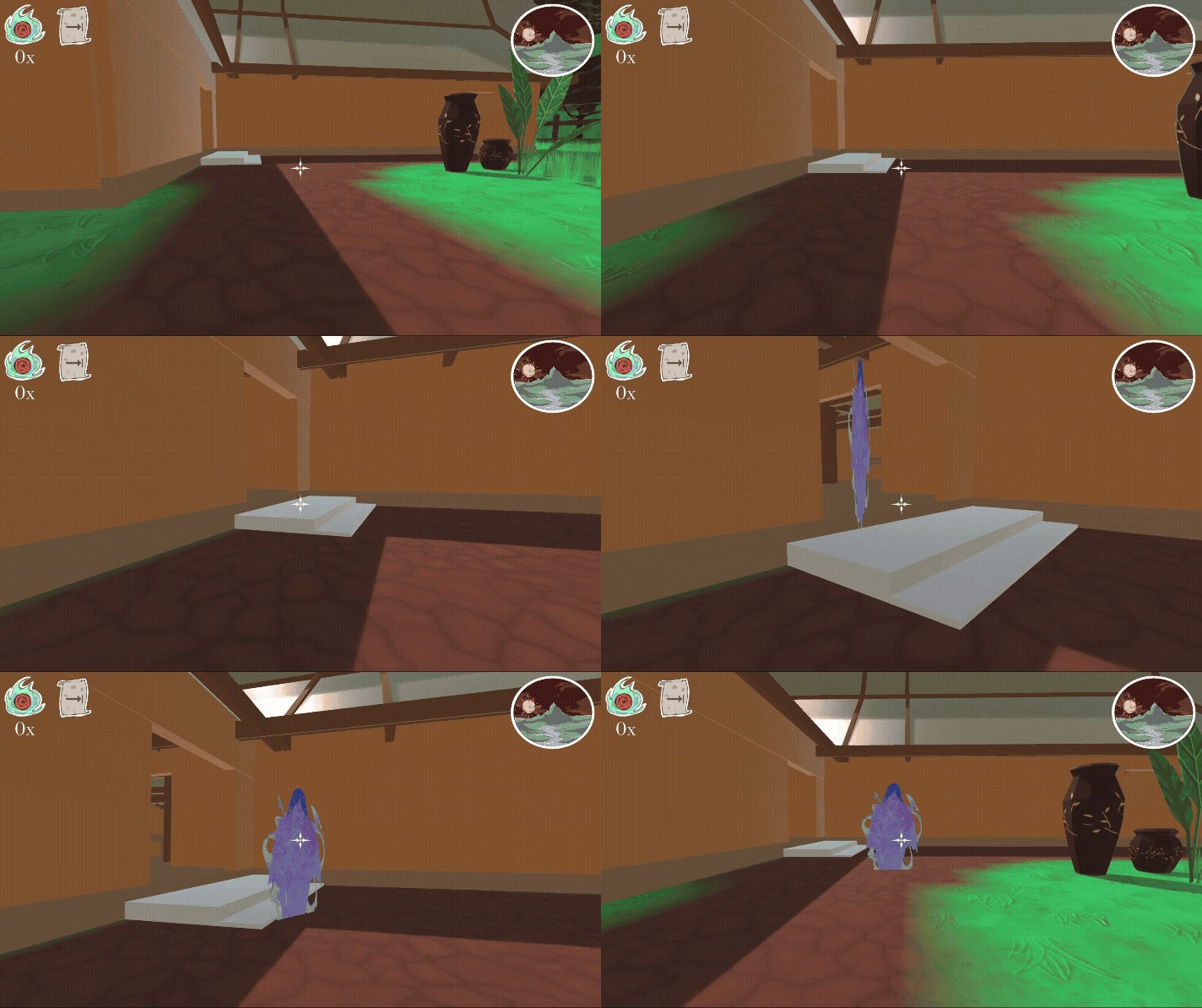
Dropping Walls for Defense
The wall is set up so that when the player's raycast hits it, the player can press the button and drop the wall. While the wall is down, it blocks all pathfinding, allowing the player to escape. The wall stays down for 15 seconds before it rises back up automatically. This forces the player to use them more strategically.
Searching Containers
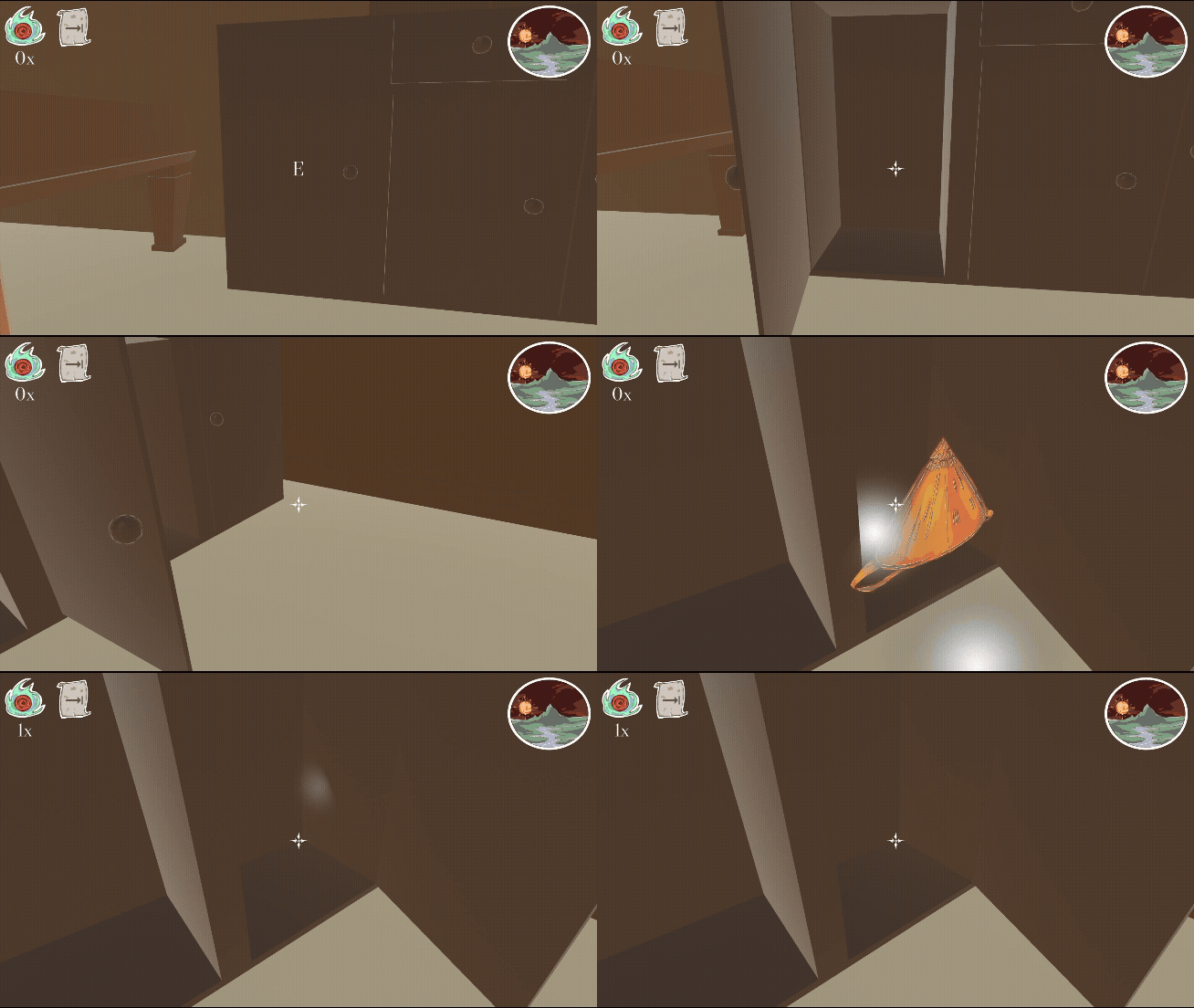
When the Player's raycast hits the object with the correct tag and the button is pressed, the object changes into its opened state. Other objects can also be stored within the opened state, allowing for objects to be stored within them.
Traps
Once the player walks into the hidden trigger in the room, a trap gets set off. These traps can be multiple different types. The traps also uses spline to follow set paths to be more fluid and unpredictable to hit the player. Once the trap has done its thing, it disappears and can be triggered again later.
Wyrm and Spirit Movement
I made 3 different types of movements for the enemies to make each one feel unique. Each one, though, moves differently between the village and the arena to manage the different spaces.
- Movement 1 has the enemy move faster the farther away they are from the target. This gives the enemy an intimidating feel at times, while also being easy to dodge. It was used as a starting enemy to introduce the enemies.
- Movement 2 keeps a constant speed no matter how far away they are from their target. This allows a challenging AI that might not be intimidating, but is very difficult to escape and dodge.
- Movement 3 has them move faster the closer they get to their target. This makes them into a very intimidating and unpredictable enemy that can surprise and overwhelm, but isn't too difficult to dodge.
Targeting
There are multiple different variables regarding how the AI targets the player:
- The Player has a sound collider that the AI looks for, allowing the AI to "hear" the player from afar
- The Player's sound collider gets bigger when they run
- There are obstacles like walls that the player can throw down to block the pathfinding, forcing the AI to take the long way towards them
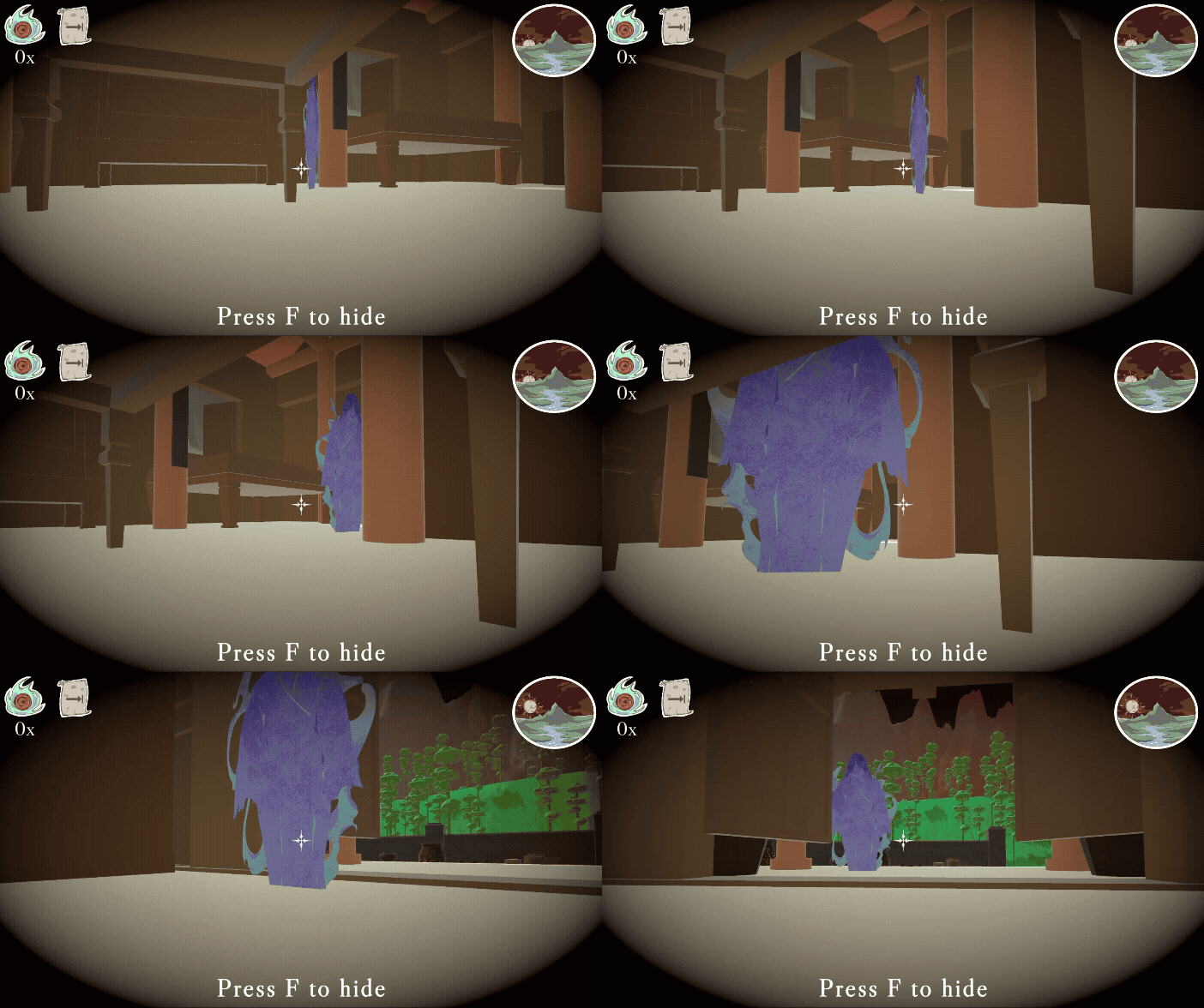
- If the player is hiding, they are hidden from the navmesh for pathfinding and any colliders of the AIs
Attack
The AI attacks by chasing the player. Once the player gets too close and enters the attack radius, the player gets killed.
Menus
The menus I made and worked on are:
- The Main Menu with Play and Quit buttons
- The Pause Menu with Continue, Unstuck, and Main Menu buttons
- The Respawn Menu with Respawn and Main Menu buttons and a small tips area that randomly selects from a list of tips to help the player
Cutscenes
There is a cutscene UI that plays specific cutscenes after a certain action has been done or a button has been pressed. The cutscene will automatically play until it's finished. You are also able to skip all cutscenes incase you don't want to sit through the whole thing.
Loading Screens
Loading screens have been put in to give the player something to look at while waiting for something taking a while to load, like loading a new scene.
The loading scenes pick a background out of a list of art we used for concepts or features, giving the player something to look at while waiting.
Credits
Once reaching the credits, they will scroll up automatically. The text is positioned so that it rises and timed so that it pauses on moments like the logo and "Thanks for playing”. Once this finishes, the player is sent to the main menu, but can also skip if they don't want to see the whole thing.
Respawn
When respawning, the group decided to give the player 3 lives. Until they reach their final life, respawning only warps them back to spawn, keeping the progress they've made. Once the final life is lost, the level resets completely.
Progression
We have the progression monitored during the gameplay, noting how many key objects are picked up, what level they are on, and what enemy is after them.
Tutorial
The tutorial is put together to look for specific actions to happen. Once an action is performed, the player moves on to the next part of the tutorial. The player is also locked into the tutorial area until they complete it.
Save Data
We have data saved for moving across each scene, such as the inventory and lives.